
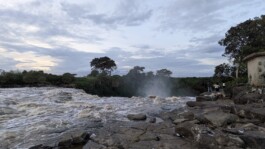

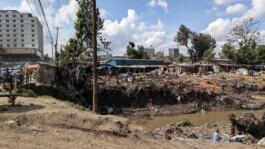

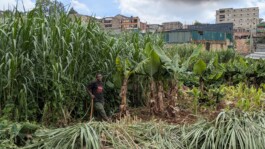
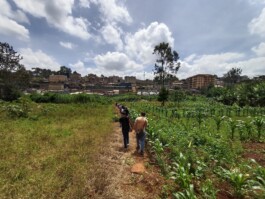
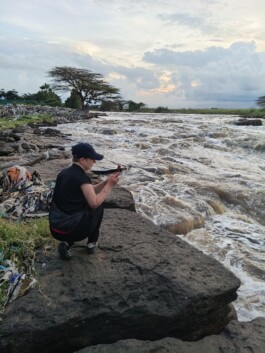
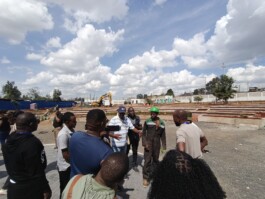
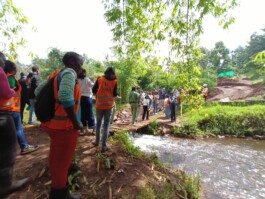
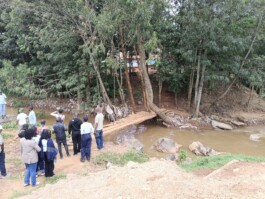



Field excursions along the Nairobi River corridor, from the Ondiri Wetlands through informal settlements, industrial areas, the central business district, and downstream communities, enabled participants to observe the interconnected nature of urban environmental processes.
The Nairobi River provides a powerful illustration that waste is not simply a technical challenge of collection and disposal, but a wicked urban problem that exposes broader questions of governance, justice, health, livelihood, infrastructure, and belonging. It is a space where environmental and social processes cannot be separated, and where alternative urban futures are already being negotiated in everyday practice. EC(h)OTONING, from this perspective, is both an analytical lens and a call for action, an invitation to recognise that more just and sustainable cities will emerge not from managing sectors in isolation, but from engaging the thick edges where multiple worlds meet.


Photos by Moloko Raphahlelo and Cella Osewe